
Finishing a Live Edge Slab with Oil or Wood Slab Epoxy
Start by choosing which face will be visible and how much of the natural edge you want to keep. Check that the timber is dry, then prepare the surface, fill any gaps you want closed and apply the finish.
Look at both ends before marking your finished length. A split at the end can affect how much of the slab you keep. Our live edge slabs include air-dried and kiln-dried pieces, depending on stock.
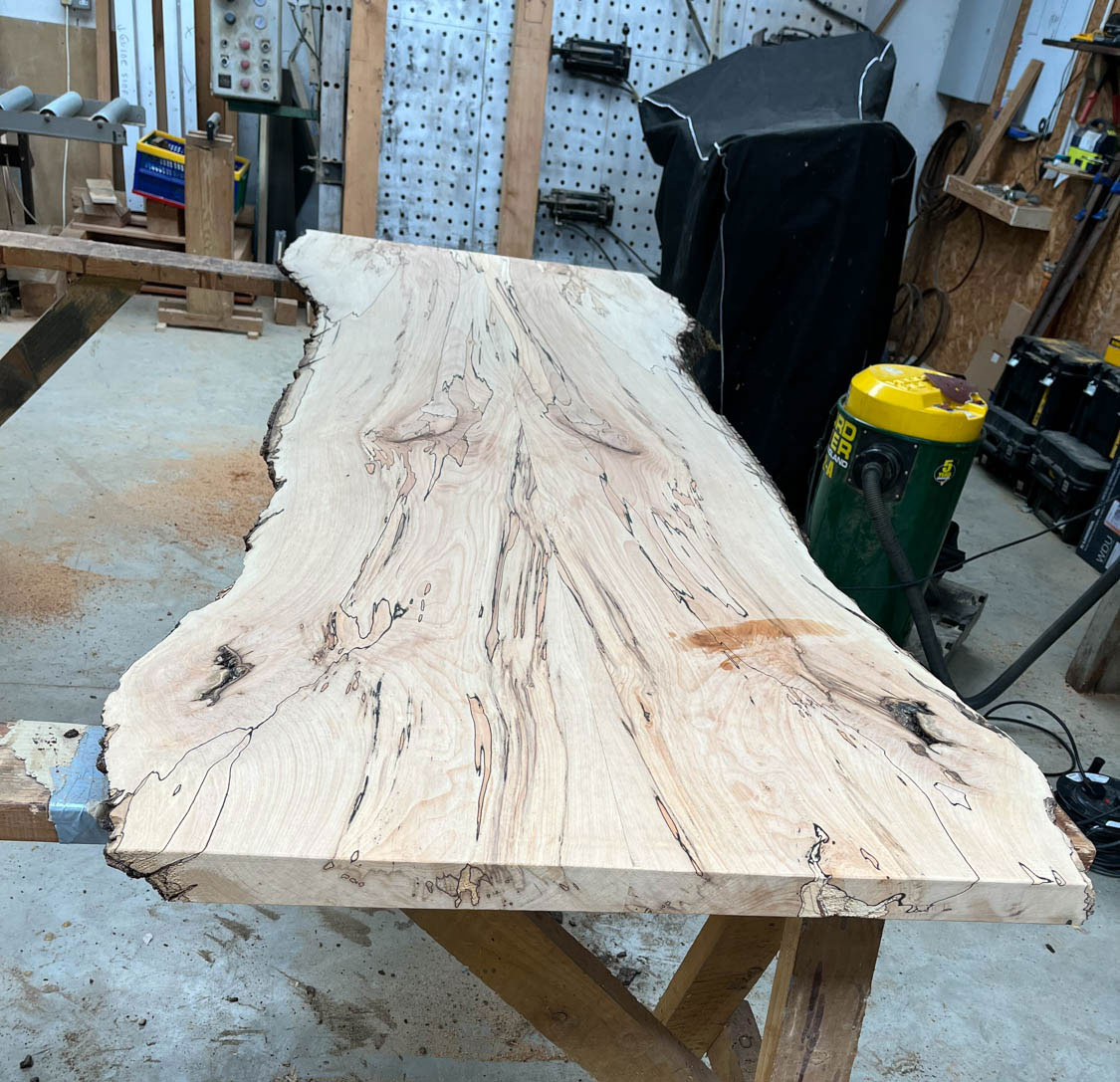
Preparing a Slab for Oil or Wood Slab Epoxy
Let the slab adjust to the conditions where it’ll be used. Check its current moisture content with a meter and compare the reading with the finish maker’s guidance. If the top needs flattening, check that you have enough thickness left for the finished piece after the high spots are removed.
Mark any knots or splits you plan to fill and measure their depth. Mark the features you want to leave open as well. For a finish that combines resin and oil, check that the chosen products can be used together before you begin.
Debarking Live Edge Slabs and Sanding
Lift off loose bark and clear away soft material. A hand scraper can help you follow the curve of the edge. Where epoxy will meet the edge, prepare the firm, bare timber the resin needs to bond to.
When sanding live edge wood, work through progressively finer grits. Use a flat sanding block on broad areas and a flexible pad along the natural edge. Follow the grit recommendation for the next step, whether you’re preparing bare wood for a fill or for oil. Use dust extraction and suitable respiratory protection. Vacuum the surface and the gaps before applying a finish.
Treating Live Edge Wood with Oil or Epoxy
Wood slab epoxy can fill knots or splits in a sound piece of timber. Finishing oil brings out the grain on the surface. Use the steps for the type of finish your slab needs.
Filling a gap with epoxy
- Choose a resin suited to the depth of the gap. Clean and dry the timber. If a split goes right through the slab, use backing recommended for the resin to contain the pour.
- Follow the manufacturer’s mixing ratio, temperature, and pour depth limits. Use the specified gloves and ventilation.
- Allow the fill to cure as directed. Prepare and sand it level with the surrounding wood before applying a compatible finish.
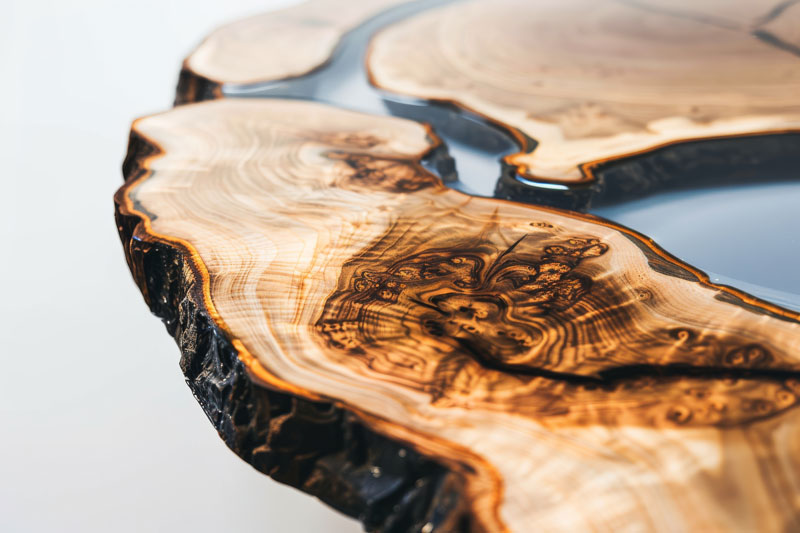
Applying a finishing oil
- Sand an offcut to the same grit as the slab and test the oil there to see how the grain and colour will look.
- Apply the oil to clean, dry timber. Follow the product directions for the number of coats, when to wipe off excess and how to handle used cloths.
- Let the finish cure fully before putting the piece into use.
For an oak tabletop with a filled knot, run a straightedge across the cured, sanded patch. That helps you spot a rim or hollow around the fill before oiling the whole face.
Get a Quote for Live Edge Stock
Tell us your preferred species, finished length, minimum width and finished thickness. If you plan to flatten the slab yourself, we can check which pieces have enough extra thickness for the job.
Include any drying requirements with your measurements, or call us on 046 90 21240 to discuss your project.