
Hardwood vs Softwood Timber
Start with what you’re making. For a dining table, think about everyday wear and how the grain will look across the finished top. For a beam, start with where it will sit and whether it will carry a load.
We saw Irish-grown oak, Douglas fir and hemlock at our mill in Gainstown, Navan, Co. Meath. If you need timber cut to size, a cutting list tells us how many pieces you need at each size. A sketch can also show which faces will be visible.
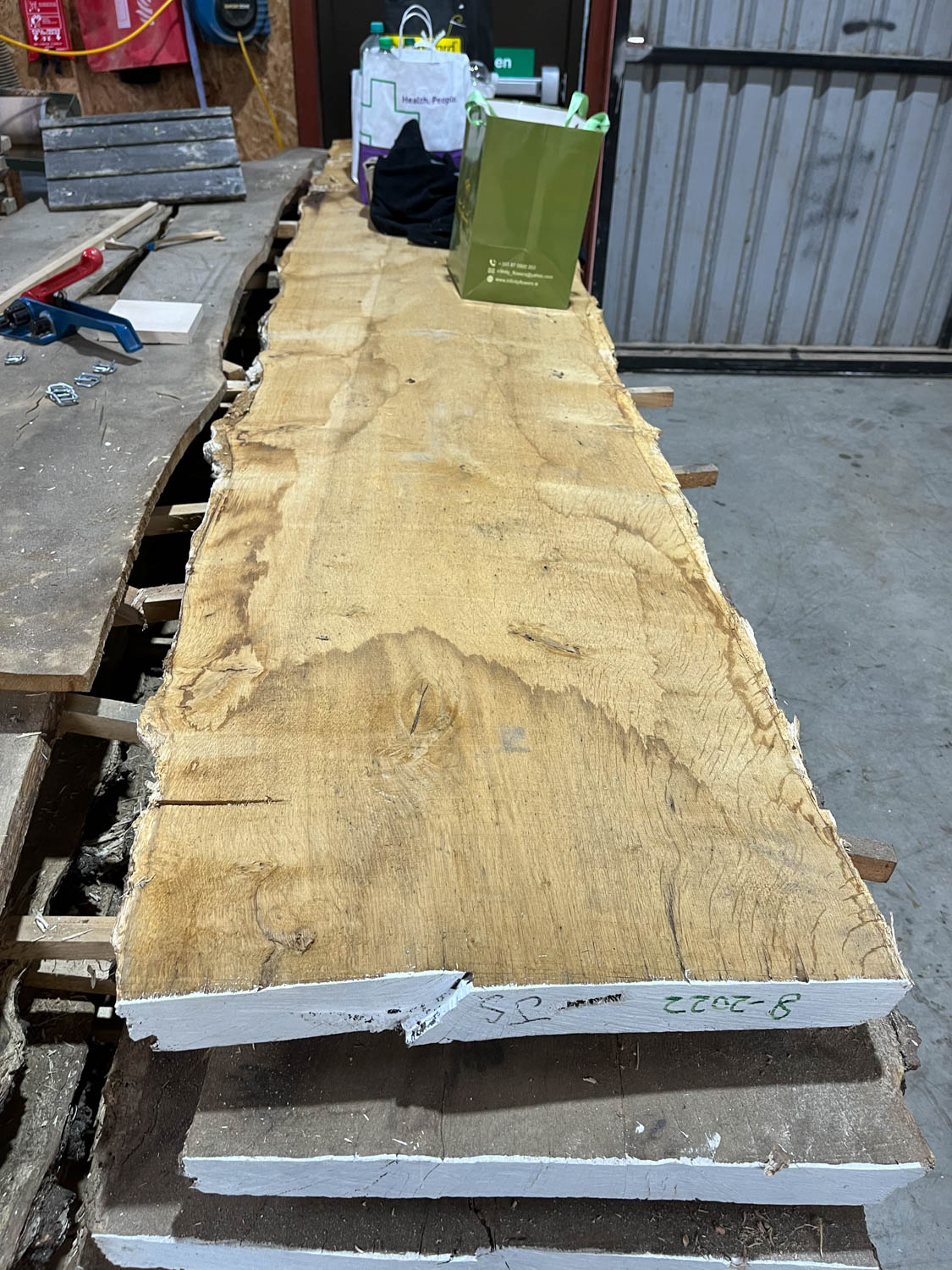
Hardwood vs Softwood for Beams and Boards
Hardwoods come from flowering trees such as oak. Softwoods come from conifers such as Douglas fir and hemlock. Hardness, strength and ease of working vary by species and by piece.
If you’re looking for the strongest timber for a beam, start with the strength grade and dimensions specified for your project. These depend on what the beam has to carry and how far it spans. Check with your engineer before ordering a different size or species.
Timber
Oak
Douglas fir
Hemlock
Typical appearance
Yellow-brown with a distinct grain
Reddish-brown tones with clear growth rings
Pale brown with a fairly even texture
Common uses
Furniture, flooring and feature beams
Beams, joinery and cladding
Interior joinery and mouldings
Oak for Furniture and Feature Beams
Oak is a hard-wearing choice for furniture. For a tabletop made up of several boards, lay them side by side before marking out the pieces. Look at how the colour and grain run across the surface and where any knots will sit. Browse our hardwood timber for oak boards and planks.
For an exposed oak beam, decide which faces will be on show and whether you want visible saw marks or a smoother planed surface. If the beam has to fit between walls, confirm the finished dimensions with your installer before ordering.
Douglas Fir and Hemlock for Beams
For a Douglas fir porch beam or another outdoor job, check how often the timber will get wet and whether it can dry between periods of rain. Use timber suited to that exposure and check whether your project specifies a preservative treatment.
Hemlock can take a smooth planed finish for interior work. If you’re choosing a finish for an exposed beam, try it on an offcut to see how it changes the colour and grain. You’ll find both Douglas fir and hemlock in our softwood timber range.
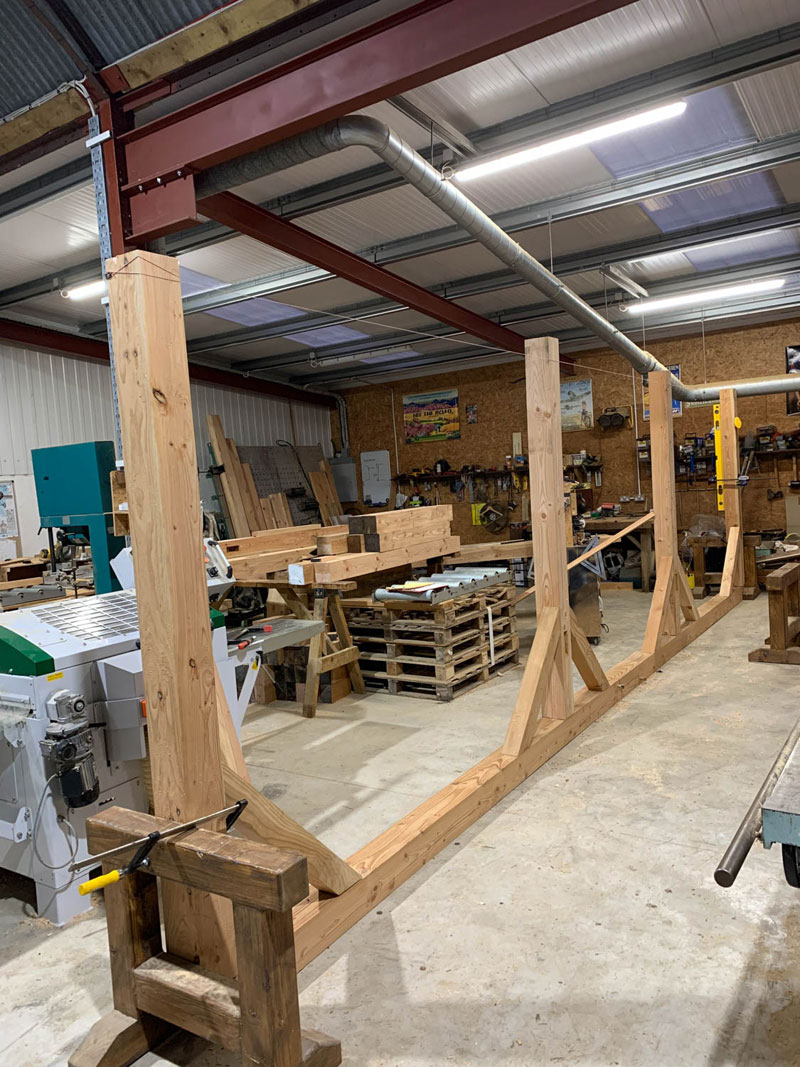
Choosing Timber for Woodturning and Carving
The best hardwoods for turning depend on what you’re making and how much grain you want to show. When choosing woodturning timber, check the faces and ends for splits in the area you’ll use. Some turners work with freshly cut timber. If the finished piece needs to fit another part, check how dry the timber is, as it can change size as it dries.
Look for straight, even grain when choosing wood carving timber for small details. This makes it easier to follow the grain with hand tools. Oak can suit larger shapes where you want the grain to show. Check where any knots and splits sit in relation to your pattern before you pick a board.
Get a Timber Quote
Send us the species, finished dimensions, quantity and finish you need. For a load-bearing beam, include your engineer’s specification so we can check whether we can supply timber to the required grade and size.
For turning or carving, tell us what you’re making and whether you need dried timber. Call us on 046 90 21240 to discuss your project.