
Cutting Oak Beams and Restoring Wooden Beams
Start by finding out whether the beam supports a floor, roof or another part of the building. A beam can be a feature and still carry a load. If you’re restoring an older beam, look at its condition before deciding how to clean or finish it.
Our timber beams include oak, Douglas fir and hemlock. If you’re choosing a new beam, think about which faces will be visible and whether you’d prefer the texture of a sawn finish or the smoother surface of a planed finish.
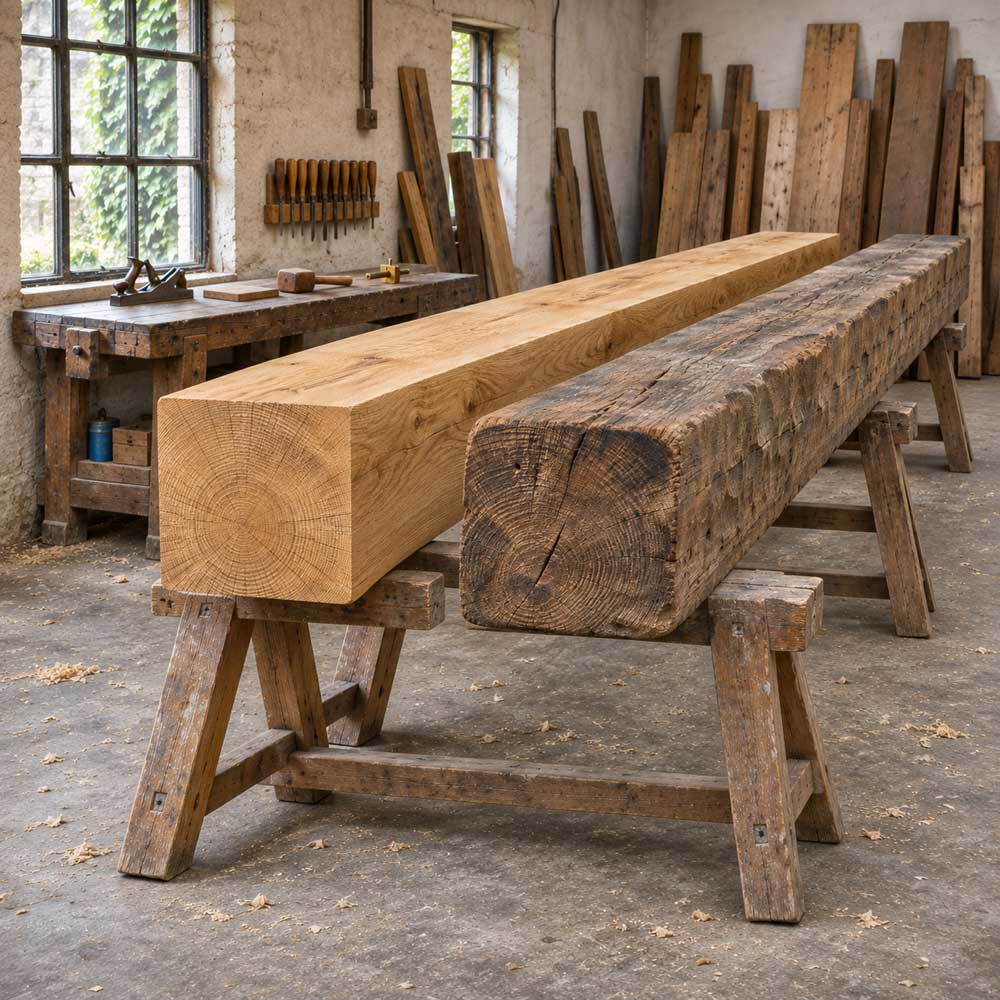
Cutting Oak Beams and Notching Wood Beams
When cutting oak beams to fit an opening, take your measurements where the beam will sit. Check whether the walls are square and mark any angled ends on your sketch. If you’re fitting several beams, give each piece a label on the sketch and use the same labels on your cutting list.
Allow for trimming if you plan to cut the ends on site. Tell the sawmill whether the dimensions on your list are the final sizes or include extra length for trimming. If you want a planed finish, confirm the dimensions after planing before you order.
A notch removes timber from the beam. The depth and position of the cut can affect how much weight the beam can carry. If the beam supports part of the building or you’re unsure what it supports, have a structural engineer check any proposed cuts or holes first. Show them where the beam rests and where you need room for a joint, pipe or fixing.
Sanding and Restoring Wooden Beams
When restoring wooden beams, look at the visible ends where they meet the walls. If the timber feels soft or you see signs of damp, find out where the moisture is coming from before refinishing. Have signs of decay in a load-bearing beam checked by a structural engineer.
Have any old coating you can’t identify checked before sanding. On timber that’s suitable for sanding, try a small patch on a less visible face to see how the colour and texture change. Use dust extraction with the sander and wear suitable respiratory protection.
Sandblasting oak beams can wear away softer parts of the grain and leave a rough surface. If the beam has old tool marks you want to keep, point them out to a specialist and ask for a trial on a less visible area before treating the whole beam.
Fire Protection for Timber Beams
If you’re looking into fireproofing wood beams, ask your project designer what fire resistance the building requires. For a load-bearing beam, this can include how long it must continue to support its load during a fire.
Tell the designer which faces you want to leave visible and show them how the beam will be supported and fixed. If they specify a protective coating or lining, follow the installation details in their specification. Keep the product and installation details with the project drawings.
Get a Quote for Live Edge Stock
If your project calls for new or replacement timber, we cut oak beams to order. Send the finished sizes, quantity and preferred finish. For a load-bearing beam, include your engineer’s specification so we can confirm what we can supply.
Call us on 046 90 21240 to discuss your cutting list.